
After months of changes, during the silence of the Christmas holidays, I found myself returning to an old passion. We are often running, doing more, planning the next step, without always knowing exactly where we are going. Sometimes it’s necessary to slow down, to pause, and to reconnect. This applies to everything, from work–life balance to how we enjoy multimedia.
In an age of instant streaming and perfectly compressed sound, rediscovering vinyl feels like slowing down time, on purpose. The soft crackle before the needle settles into the groove, the gentle imperfections, and the warmth that fills the room remind us that music doesn’t have to be rushed. You need to pick the right LP, take it out of its cover, place it on the turntable, and carefully position the needle. These are all active, intentional gestures that make you truly live the music. Vinyl doesn’t just play music, it creates an experience.
Listening to records is a ritual. You choose an album, take it from its sleeve, place it carefully on the turntable, and commit to listening, side A, then side B, without skipping tracks. This deliberate act reconnects us with music as a physical and emotional journey, not just background noise.
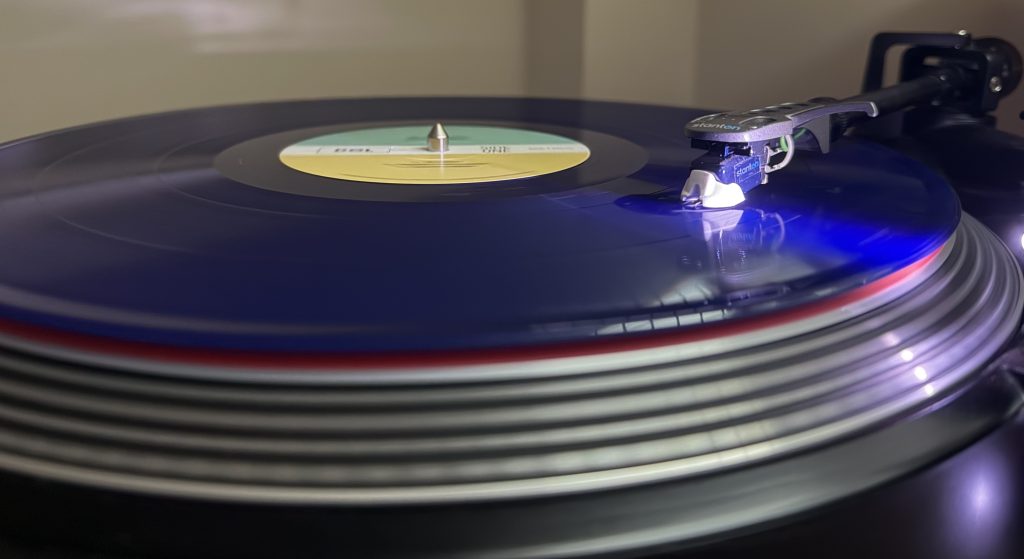
There is also something almost magical in watching how sound is created. The needle is physically guided by the grooves carved into the vinyl, tiny mechanical movements that are transformed into an electrical signal. That signal is then amplified and sent to the speakers, where it makes the woofer move, turning microscopic vibrations into music you can feel in your chest. Seeing this chain from motion to electricity to sound makes the experience feel tangible and alive.
Setup
I still have my old turntable from high school, back when I (tried to) be a DJ. The turntable itself is still in great shape, but the speakers needed an upgrade. I wanted something compact, good-sounding, and flexible enough to grow with the setup.
So I chose a pair of active studio monitors, clean, precise, and easy to integrate. They can be connected directly to my active subwoofer when I want a fuller low end, but they also work perfectly on their own. I prefer studio monitors because they offer a clear and balanced sound, which is ideal not only for vinyl listening but also for everyday use with my computer in a near-field setup.
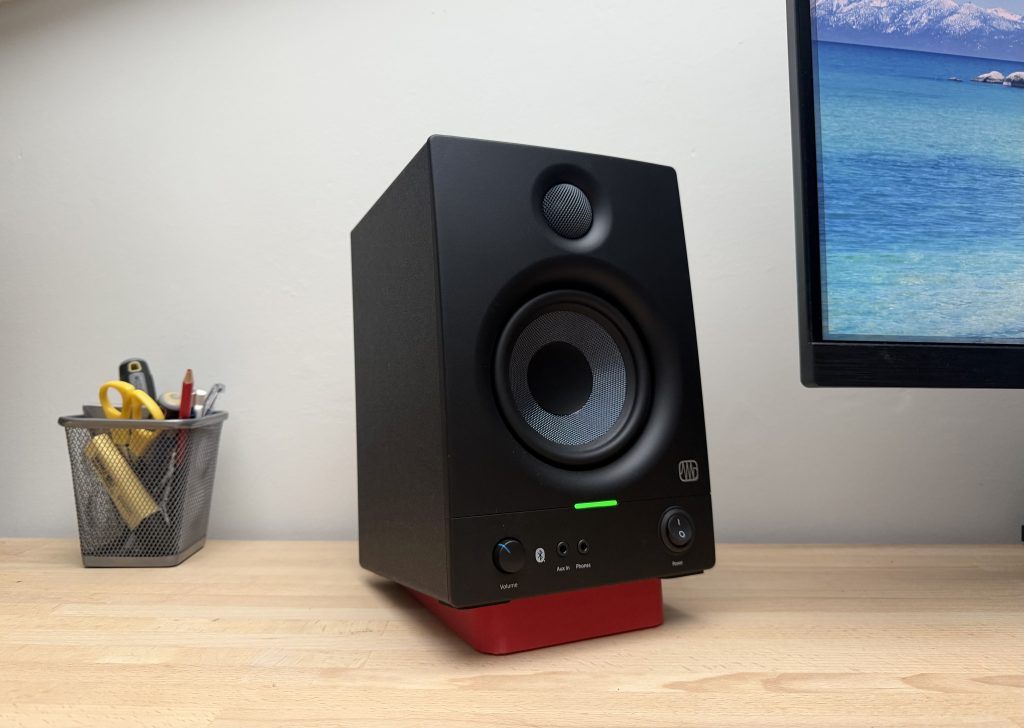
I’m still deciding whether I need the inclined support with rubber decoupling elements. In any case, this red support is 3D-printed.
Analog sound has a character that digital formats often smooth away. Vinyl captures subtle dynamics, depth, and texture, making familiar songs feel alive again. It’s not about technical perfection, but about presence, the feeling that the music is happening right there, in real time.
Rediscovering vinyl is also rediscovering patience, attention, and craftsmanship. Album artwork becomes part of the story, liner notes invite curiosity, and the music asks for your time. In a fast world, vinyl reminds us that sometimes the old ways still sound the best.
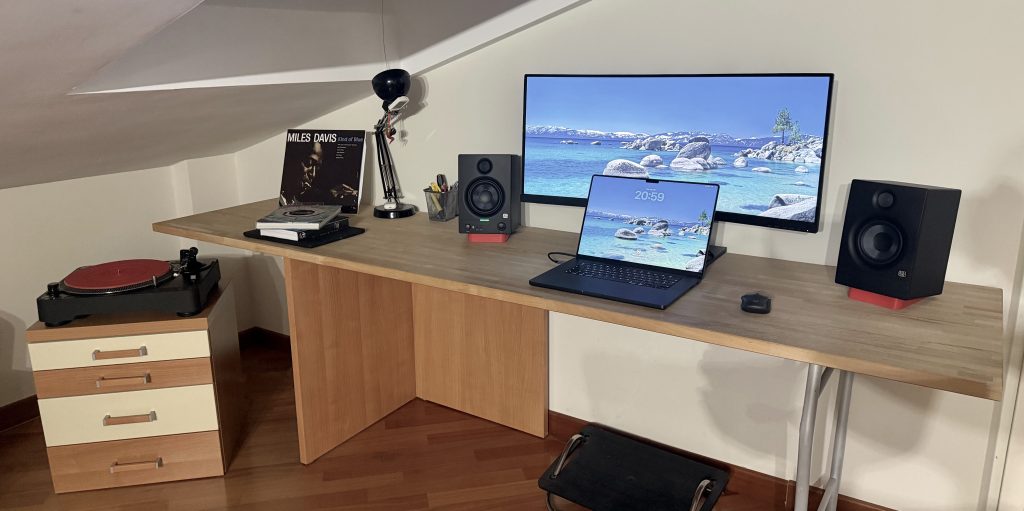
I’ll update the picture with one that doesn’t have all these shadows someday
Now it’s time to buy a few good LPs, or maybe start producing some music myself, and truly feel the rhythm, from the groove in the vinyl to the movement of the woofer.
Tech notes
Vinyl playback is based on a beautifully direct physical principle: mechanical motion is transformed into an electrical signal, and finally into sound. Music is stored on the record as a continuous spiral groove whose microscopic modulations represent the audio waveform. In stereo records, the groove walls are cut at ±45°, encoding the left and right channels separately. These grooves are incredibly small, typically around 50–80 micrometers wide and 20–35 micrometers deep, with the finest details reaching well below a micrometer, yet they contain all the complexity of the music.
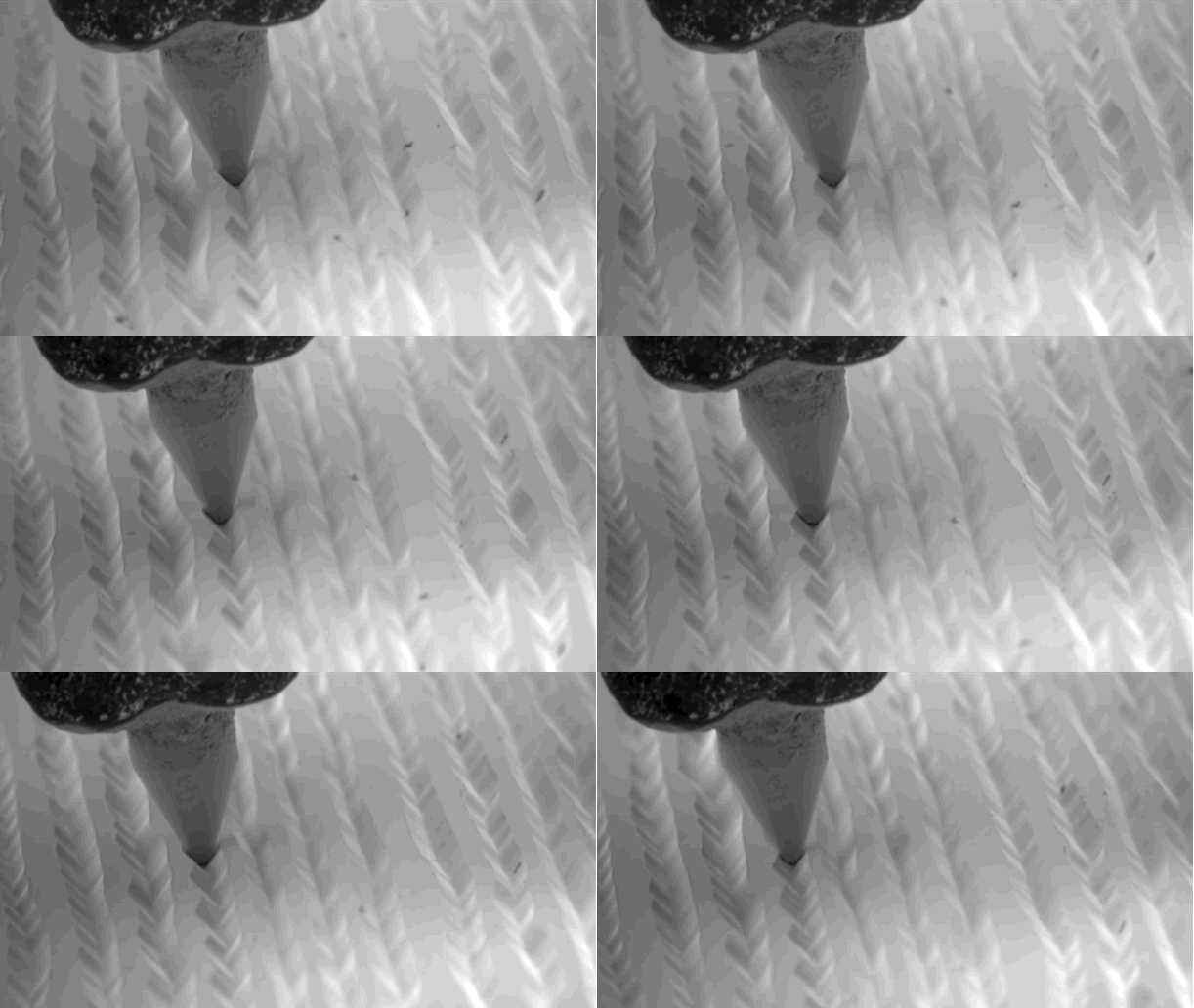
Source: earthlymission.com
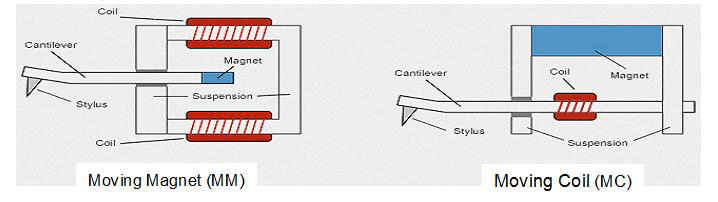
The stylus, almost always made of diamond, sits inside the groove and follows its tiny variations as the record spins. Depending on its shape, the stylus tip radius ranges from roughly 5 to 25 micrometers, allowing it to track different levels of detail. The stylus is connected to a lightweight cantilever, usually made of aluminum, boron, or carbon fiber, designed to be both stiff and responsive. Every vibration picked up by the stylus is a direct physical trace of the sound originally cut into the vinyl.
Source: austinaudioworks.com
These vibrations are then converted into an electrical signal inside the cartridge through electromagnetic induction. In moving-magnet or moving-coil designs, the motion of the cantilever generates a tiny current, only a few millivolts, that faithfully mirrors the groove’s movement. Note that this is the reason why my turntable in the picture is not on the same desk of the woofers.
After amplification, this signal drives the speakers, moving the woofer back and forth to push air and recreate the sound. From microscopic grooves to visible speaker motion, vinyl makes music something you can see, touch, and truly experience