
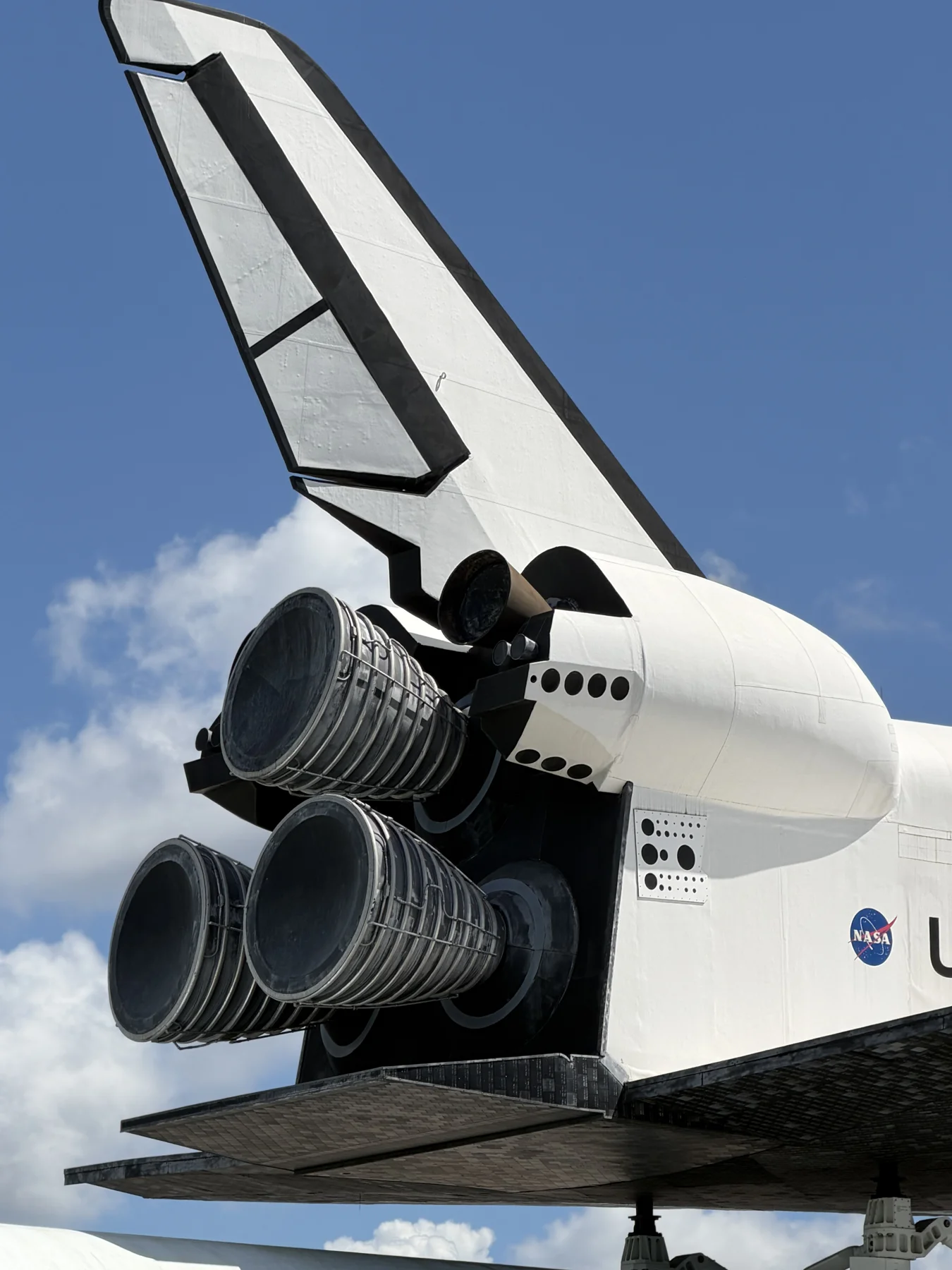
The conference season started in July with the World Congress of Biomechanics in Vancouver. After the congress came Banff and the Canadian Rockies, then a return to Rome and a summer break before the meetings resumed in Milan and, finally, Texas. What connected the stops was a set of questions that kept changing scale: how to model a biological process, how to make a simulation useful, and how to move a research tool into a workflow that someone else can actually use.
The Canadian part has its own photographic account. Here, three photographs from Canada reconnect the beginning of the journey with the meetings after the summer break: ESB-ITA and VPH in Milan, followed by AESCAPE in Dallas.
Milan / ESB-ITA and VPH
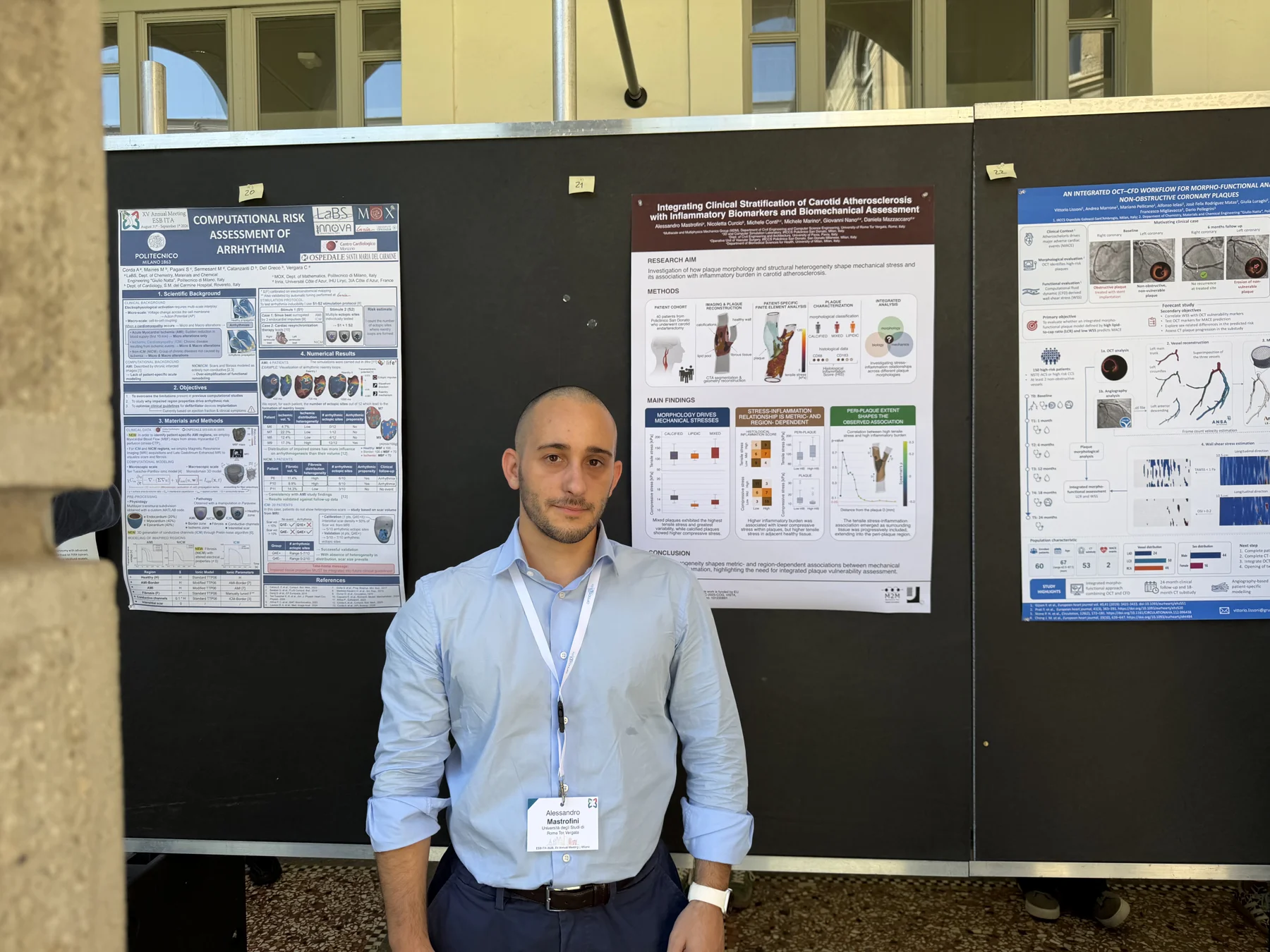
The ESB-ITA annual meeting took place at Politecnico di Milano on 31 August and 1 September 2026. Its programme included a symposium on AI-enhanced biomechanical modelling, bringing the discussion from research towards clinical applications. It was a fitting connection to the next meeting: VPH began at the same location as ESB-ITA concluded.
At these meetings I presented my research and had the opportunity to discuss it with colleagues working across biomechanics and in silico medicine. Having the two communities together made the week particularly useful: the same modelling question can lead to a discussion about mechanics in one room and about clinical usefulness or credibility in the next.
VPH stands for Virtual Physiological Human. The society brings together a community working on computational approaches to understanding the body and supporting healthcare. The conference in Milan ran from 1–4 September. For my work, it is a natural place to connect patient-specific modelling with the wider questions surrounding its use: what the model captures, what evidence supports it, and how its results can be communicated.
There were two personal milestones as well. I was a finalist for the VPH Best Presentation Award, part of the conference’s young-scientist awards. I was also appointed to the new VPH Young Scientists Committee for 2027–2028, whose mandate begins in January 2027. It is an opportunity to contribute to the community through the support, exchange and representation of early-career researchers.
Dallas / AESCAPE and AI in engineering
After the Canadian congress, the summer break and the meetings in Milan, the next conference stop was Dallas, for AESCAPE 2026: AI-Empowered Simulations & CAE Applications via Engineering Software 3.0, held from 8–11 September. USACM’s announcement describes a meeting connecting computational mechanics, artificial intelligence and engineering software, with researchers and industry practitioners in the same conversation.
The programme’s focus on AI agents, physics-aware models and engineering workflows brought a different perspective to the questions from Milan. In research, an AI tool can help explore models, organise computational work or suggest directions worth testing. The interesting question is what happens after the first convincing example: how the result is checked, how assumptions are recorded, and how a workflow can be repeated.
For companies, that becomes a question of integration. A useful tool has to work with existing data, software and engineering responsibilities. Speed matters, but so do traceability and knowing when a result needs another check. An assistant that prepares a simulation still leaves someone responsible for the geometry, boundary conditions and interpretation.
That is the part of AI in engineering that interests me most: making more of the modelling process accessible while keeping the scientific reasoning visible. AESCAPE provided the context for thinking about the distance between an experimental research workflow and a tool that a team could maintain and use in practice.
Texas / outside the programme
There was also time to travel. The photographs follow the Dallas–Fort Worth area, Fort Worth’s Stockyards, a stop in Waco, Austin, and Space Center Houston. Conference rooms give way to roads, city streets, a rodeo and spacecraft: a rather different set of scales again.
The gallery begins with three photographs from Vancouver and the Rockies, then continues through Milan and Texas. Places and dates come from the camera metadata. The extended map connects the photographed stops across both continents, including the first congress in Canada; the summer break separates that July chapter from the meetings at the end of August and in September.
Loading the photographic route…
The useful part of moving between these meetings is bringing a question from one setting into the next. Milan kept the medical application in focus. Dallas widened the discussion to AI and engineering software. The journey around Texas gave me a few other things to look at before returning to the work.