
Explaining your research to someone who did not come for a mechanics lecture is a useful test. The first thing they need is a reason to care about what they are looking at.
At the European Researchers’ Night at NET Village in Rome, we brought our research outside the lab through interactive experiences. Visitors could explore scientific models, change their point of view and ask questions about what they were seeing.
Give the visitor something to explore
Augmented reality can make an abstract result easier to approach. Instead of starting with a full explanation of the numerical method, I can begin with a structure or a movement that someone can inspect. It gives us a shared object for the conversation.
That is useful beyond public outreach. Clinicians and researchers from other backgrounds also need a way into a model before discussing its assumptions and limitations. Being able to explore a result helps establish that connection.
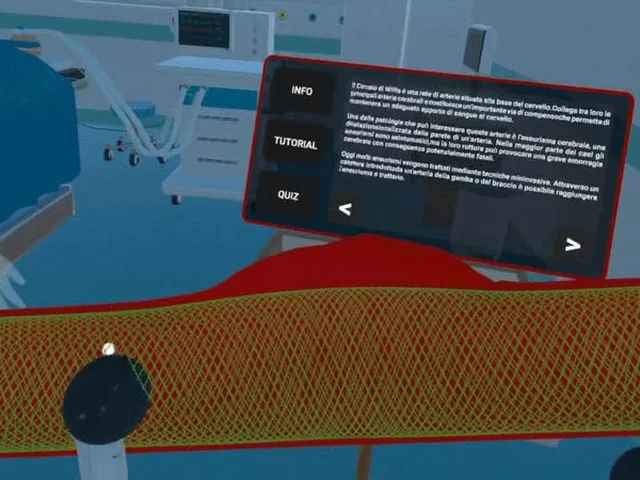
AR and VR offer different experiences. The animation below shows an immersive demonstration shared in my original event post. It accompanies the account of the event, rather than implying that every headset or screen at the stand used the same technology.
A different kind of feedback
The questions at an event like this do not follow the order of a paper. A visitor can notice one region of a model, ask what the colours mean, or want to know how the virtual object relates to something in the body. The explanation has to respond to that curiosity.
The interpretation still matters. An animation needs a description of what was computed, and a colour map needs a quantity and a scale. Interaction makes it easier to point to the question, while the researcher still has to explain the answer.
Seeing people interact with our work was a reminder that research does not stop at producing results. Communicating them is part of making them useful. We also made it onto the news, linked in the original post below.